

 English
 Español
Home / News / Industry News / Everything You Need to Know About Elevator Landing Doors: Types, Safety, and Maintenance
Industry News

Tel/wechat/whatsapp: +86-13812695057
E-mail: [email protected]
Content
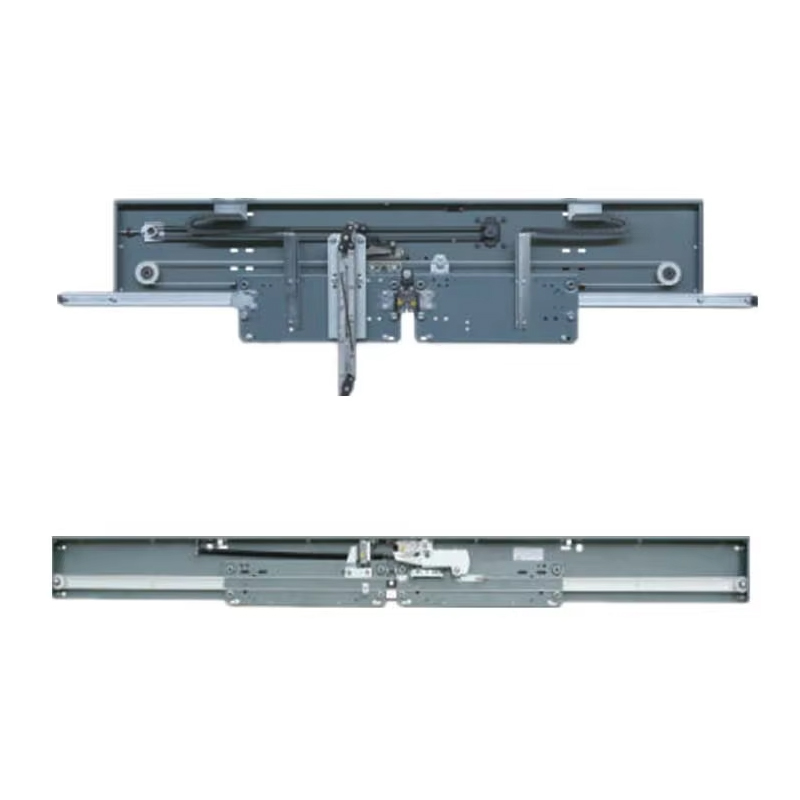
An elevator landing door — also commonly referred to as a hall door or hoistway door — is the fixed door installed at each floor level of a building that seals the elevator shaft opening when the elevator car is not present at that floor. Unlike the car door, which travels with the elevator, the landing door stays at its floor at all times and only opens when the elevator car arrives and mechanically couples with it. This coupling mechanism is a critical safety feature: the landing door has no motor or independent drive of its own. It can only be opened from the inside by the car door operator through a set of interlocking rollers or vanes, ensuring that the hoistway entrance is never accessible unless the elevator car is physically present and properly aligned at that landing.
The operating sequence is straightforward: when the elevator arrives at a floor, a door vane or coupler mounted on the car door engages with the landing door rollers. As the car door motor drives the panels open, it simultaneously pulls the landing door panels open through this mechanical link. When closing, the same link drives both doors shut together. Once fully closed, the landing door locks automatically via an electromechanical interlock — a device that prevents the elevator from moving unless every landing door across every floor in the building is confirmed closed and locked. This interlock circuit is one of the most fundamental safety systems in any elevator installation.
Elevator landing doors come in several configurations, each suited to different building types, traffic volumes, shaft dimensions, and architectural requirements. Selecting the right door type at the design stage has long-term implications for reliability, maintenance cost, and passenger throughput.
The single-speed sliding door uses one or two panels that slide horizontally in a single direction at a constant speed. It is one of the simplest and lowest-cost configurations available, making it common in residential buildings, small commercial properties, and freight elevators where door opening speed is less critical. The compact mechanism and minimal number of moving components translate into lower maintenance requirements and longer service intervals compared to more complex configurations.
A two-speed sliding door uses two sets of panels that travel at different speeds — the leading panel moves faster than the trailing panel — so that the full clear opening is achieved in less time than a single-speed arrangement of the same width. This makes two-speed doors the standard choice for high-traffic commercial and office buildings where minimizing door cycle time directly improves elevator handling capacity. The panels overlap when fully closed and nest behind each other when fully open, which also reduces the wall pocket depth required compared to center-opening configurations.
Center-opening landing doors use two panels that part from the center and slide simultaneously in opposite directions. Because each panel only travels half the total door width to achieve full opening, center-opening doors are faster than equivalent single-direction doors, making them the preferred configuration for high-rise office towers, hospitals, and hotels. They also deliver a more symmetrical, premium appearance that suits prestigious architectural settings. The trade-off is that they require wall pocket space on both sides of the opening, which can be a constraint in tight shaft layouts.
Swing or hinged landing doors are less common in modern installations but remain in use in older buildings, low-rise residential elevators, and some heritage or period-restoration projects where they are architecturally appropriate. They consist of solid hinged panels that open outward or inward into a lobby recess. Because they require manual operation or a dedicated swing door operator, and because they consume lobby floor space when open, they are rarely specified for new construction today. However, maintaining and replacing swing-type landing doors on existing installations remains a relevant servicing task for many elevator technicians.
Telescopic landing doors use three or more panels that stack together as they open, allowing a wide clear opening to be achieved within a very shallow wall pocket. They are widely used in freight elevators, car park lifts, and large-capacity passenger elevators where the opening width would otherwise require impractically large pocket spaces. The additional panels and interconnecting hardware mean more components to maintain, but the telescopic configuration remains the only practical solution for openings wider than approximately 1,200 mm in space-constrained hoistway designs.
A landing door is not a single component — it is an assembly of several interrelated parts that must all function correctly together. Understanding the role of each component helps building owners, facilities managers, and maintenance teams diagnose problems accurately and specify correct replacement parts.
| Component | Function |
| Door Panel | The visible face of the door; typically steel, stainless steel, or glass-infill steel frame |
| Hanger | Bracket fixed to the top of each panel; carries the panel weight and connects to the track via hanger rollers |
| Track (Header) | Horizontal rail at the top of the door frame along which hanger rollers travel |
| Hanger Rollers | Bearing-mounted wheels that support the panel on the track and enable smooth sliding movement |
| Sill | Floor-level guide channel that keeps the bottom of the door panel aligned and prevents lateral movement |
| Door Interlock | Electromechanical locking device that secures the landing door closed and sends a closed/locked signal to the elevator controller |
| Coupler Rollers | Rollers on the landing door that engage with the car door vane to mechanically link the two doors during opening and closing |
| Fascia / Toe Guard | Vertical plate beneath the sill that closes the gap between the landing sill and the hoistway wall |
| Door Frame / Surround | Structural frame fixed to the building floor slab that carries the entire landing door assembly |
Elevator landing doors are among the most safety-critical components in any elevator system, and they are subject to comprehensive regulatory requirements in every jurisdiction where elevators are installed. Compliance is not optional — non-conforming landing doors can result in elevator shutdown, building code violations, insurance liability, and most critically, passenger injury or fatality.
The primary standards governing elevator landing doors include EN 81-20 and EN 81-50 in Europe, ASME A17.1 in North America, and GB 7588 in China — all of which set requirements for door strength, interlock performance, maximum gap dimensions, fire resistance ratings, and emergency access provisions. While the specific technical values differ between standards, the underlying safety principles are consistent: the landing door must resist forced entry from the landing side, must not open unless the car is present, and must withstand the mechanical loads imposed by normal operation and foreseeable misuse without permanent deformation or failure of the interlock.
Every landing door interlock must be verified to operate correctly — both mechanically and electrically — before the elevator is permitted to move. Standards typically require that the interlock cannot be defeated by a single component failure, that the electrical contact opens before the mechanical lock releases, and that the interlock can withstand a specified static locking force (commonly 1,000 N or more) without unlocking. Interlocks must also be accessible for emergency unlocking by authorized personnel using a specific triangular key, but must be designed so that casual or unauthorized unlocking from the landing side is not possible.
In most building codes, elevator hoistway enclosures — including landing doors — must provide a specified level of fire resistance to prevent the hoistway from acting as a chimney that propagates fire and smoke between floors. Landing doors in typical passenger elevators are generally required to achieve a 30- to 60-minute fire resistance rating (classified as E30 or E60 under EN 81 terminology, or as fire-rated assemblies under IBC/ASME frameworks). Firefighter service elevators may require higher ratings. Fire-rated landing doors incorporate intumescent seals that expand under heat to close panel gaps, and the door panels, frames, and interlocks must all be tested as an integrated assembly to achieve the rating — substituting individual components from different manufacturers can invalidate the assembly's fire certification.
Landing door faults are among the most frequent causes of elevator breakdowns and service calls. Most problems are mechanical in origin, caused by gradual wear, contamination, or impact damage rather than electrical or control system failures. Knowing the typical failure modes helps maintenance teams prioritize inspection tasks and identify deteriorating components before they cause a breakdown.
A structured maintenance program for elevator landing doors reduces breakdown frequency, extends component service life, and maintains compliance with safety inspection requirements. The following schedule reflects best practices aligned with EN 13015 (maintenance for lifts and escalators) and similar frameworks, though the exact intervals should be confirmed against the elevator manufacturer's maintenance manual and local regulatory requirements.
Landing door replacement is a significant but common scope of elevator modernization work. Doors are often replaced as part of a broader cab refurbishment, in response to persistent mechanical failures, following impact damage that has compromised structural integrity, or to meet updated fire resistance or accessibility code requirements. Several important considerations govern replacement projects.
The new landing door assembly must be compatible with the existing car door operator — specifically the coupler vane geometry, opening width, and door speed profile. Mismatches between car door and landing door coupling geometry are a frequent source of problems in modernization projects where car and landing doors are sourced from different manufacturers. Always confirm compatibility in writing with both suppliers before ordering.
For fire-rated applications, replacement doors must carry a valid third-party fire test certificate that covers the exact assembly being installed — including the specific frame, panel, interlock, and sill components. It is not sufficient to mix certified components from different tested assemblies and assume the combination carries the same rating. This is a commonly misunderstood compliance requirement that can result in failed building inspections.
When upgrading landing doors in occupied buildings, phased replacement floor by floor is the standard approach to minimize elevator downtime. Work on each floor typically requires taking the elevator out of service for a half to full working day depending on the door type and any remedial work required to the surrounding frame or builder's work opening. Coordinating with building management to schedule work during low-traffic periods — evenings, weekends, or building shutdowns — minimizes disruption to occupants.

Tel/wechat/whatsapp: +86-13812695057
E-mail: [email protected]
Add: Building 7, No. 268, Chang 'an Road, Bache Sub-district, Dong Taihu Ecological Tourist Resort (Taihu New Town), Wujiang District, Suzhou City, Jiangsu Province, China