

 English
 Español
Home / News / Industry News / Home Lift Doors: Everything You Need to Know Before You Buy or Upgrade
Industry News

Tel/wechat/whatsapp: +86-13812695057
E-mail: [email protected]
Content
A home lift door is the entry and exit barrier of a residential elevator, serving as both a functional safety component and a key design element of the lift system. Unlike commercial elevator doors engineered purely for high-traffic durability, home lift doors must balance safety performance, smooth and quiet operation, aesthetic appeal, and space efficiency — all within the constraints of a private residential environment where the lift is integrated into living spaces, hallways, or custom-built shafts.
The door system on a residential elevator door is far more than just a panel that opens and closes. It acts as the primary safeguard preventing occupants from falling into the shaft, protects against the risk of the lift moving while the door is open, and contributes significantly to the overall noise level, ease of use, and visual coherence of the installation. Choosing the wrong door type for a home lift can lead to safety compromises, uncomfortable operation, wasted space, or a finish that clashes with the home's interior design — all of which are difficult and expensive to correct after installation.
Residential elevator doors come in several distinct configurations, each with different space requirements, operating mechanisms, aesthetics, and suitability for different lift types. Understanding the available options is the first step toward making the right choice for your home.
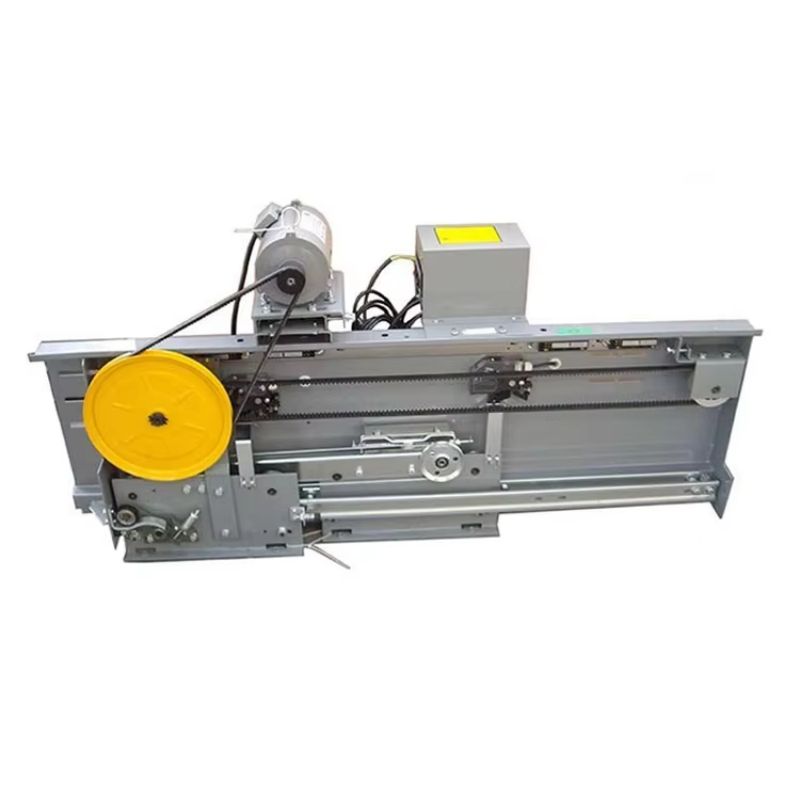
Automatic sliding doors are the most popular door type on modern home lifts. They operate horizontally, sliding to one side or splitting in the center to open, driven by an electric motor that is synchronized with the lift car's movement. Because they do not require any swing clearance, sliding doors are ideal for compact installations where hallway space is limited. They open and close quickly and smoothly, require minimal physical effort from the user, and are particularly well suited for elderly users or people with mobility impairments. Most automatic sliding residential elevator doors include built-in obstruction detection that halts and reverses the door if it contacts a person or object during closing.
Swing doors, also known as hinged doors, open outward or inward on a hinge, much like a standard interior door. They are commonly found on older home lift models and on some pneumatic vacuum elevator designs where the entry is through a curved door that wraps around the cylindrical car. Swing doors tend to be less expensive than automatic sliding systems and can be designed to blend seamlessly with the surrounding doors in a home. However, they require clear floor space in the swing arc — typically 700–900mm of clearance — and demand that the user actively push or pull the door, which can be a challenge for those with limited grip strength or who are using a wheelchair or mobility aid.
Telescoping sliding doors use two or more door panels that slide and overlap each other as they open, effectively reducing the wall space required to park the open door. A standard two-panel telescoping door only needs wall space equal to roughly half the door opening width when fully open, compared to a single-panel sliding door that needs a wall space equal to the full door width. This makes telescoping designs a practical solution for tight landing areas where there is limited wall space beside the lift opening. They are available in both manual and automatic operating versions.
Bi-fold doors consist of two panels hinged together in the middle that fold flat against one side of the door frame when opened. They occupy less wall space than a full swing door while still providing a wide clear opening. Bi-fold house lift doors are often chosen for their traditional aesthetic and their ability to match the look of bi-fold internal doors used elsewhere in the home. They work best in situations where there is limited wall space for a sliding door but insufficient floor clearance for a full swing door.
Scissor gates — also called expanding or collapsible metal gates — are a legacy door type still used on some home lifts, particularly platform lifts and older hydraulic residential elevators. They fold flat against the side of the opening when retracted and expand to fill the full opening height when closed. While they provide full-height protection and a certain vintage industrial aesthetic, they do not offer the same level of safety or insulation as solid panel doors, and they allow visibility into the shaft, which some homeowners find undesirable. Modern residential installations typically favor enclosed solid doors over scissor gates.
The material and finish of a private lift door affects not only its appearance but also its weight, durability, maintenance requirements, and acoustic performance. Most home lift manufacturers offer a range of standard finishes and custom options to match the door to the home's interior design.
| Material | Key Characteristics | Best Suited For |
| Stainless Steel | Highly durable, easy to clean, modern appearance, resistant to dents and corrosion | Contemporary homes, high-use environments, coastal properties |
| Tempered Glass | Transparent or frosted, creates open feeling, safety-rated, shows fingerprints | Panoramic lifts, modern interiors, open-plan homes |
| Powder-Coated Steel | Wide color range, cost-effective, moderate durability, can chip over time | Budget-conscious installations, color-matching to interiors |
| Timber / Wood Veneer | Warm aesthetic, matches interior joinery, requires maintenance, heavier weight | Traditional or heritage homes, custom bespoke installations |
| Aluminum | Lightweight, corrosion-resistant, available anodized or powder-coated | Compact lifts where door weight affects motor load |
| Glass + Steel Frame | Combines transparency with structural rigidity, premium look | High-end residential installations, design-focused projects |
In practice, stainless steel and glass are the most commonly specified materials for modern home lift doors because they offer the best combination of durability, easy maintenance, and visual appeal. Timber doors can create a stunning architectural statement but require periodic refinishing and are more susceptible to warping in humid environments such as bathrooms or poorly ventilated shafts.
The door system is one of the most safety-critical components of any home lift. A well-designed residential elevator door incorporates multiple layers of protection to prevent accidents, particularly in households with children, elderly family members, or people with disabilities.
Every safe home lift door must incorporate an electromechanical interlock — a locking mechanism that physically prevents the lift from moving unless all landing doors and the car door are fully closed and latched. Conversely, the interlock prevents the landing door from being opened from the outside unless the lift car is present and stationary at that floor. This dual-function interlock is a fundamental safety requirement under most national residential elevator standards (including EN 81-41 in Europe and ASME A17.1 in the United States) and is non-negotiable in any compliant installation.
Automatic sliding home lift doors should be equipped with obstruction detection — typically an infrared light curtain or a pressure-sensitive mechanical edge on the leading edge of the door panel. If the closing door contacts or detects an obstruction (a hand, a foot, a bag, a child), it immediately stops and reverses to the fully open position. The sensitivity of this system is particularly important in households with young children. Better systems use full-height light curtains that detect any obstruction across the entire door height, not just at the leading edge.
In the event of a power failure or mechanical fault, occupants inside the lift must be able to open the door manually to exit safely. Quality home lift door systems include a mechanical emergency release mechanism — accessible from inside the car — that allows the door to be opened without electrical power. Landing doors should also be releasable from outside using a special key or tool (a "fireman's release" or "emergency key"), allowing rescue personnel to open the door and assist trapped occupants.
Homes with young children benefit from home lift doors that include a child safety lock or door hold-open prevention feature. This prevents children from repeatedly opening and closing the landing door unsupervised, which can interfere with the lift's control system and potentially create a safety hazard. Some systems incorporate a key-operated lock on the landing door that restricts access to the lift unless an adult unlocks it — a valuable feature for multi-story family homes.
Modern home elevator door control systems include a programmable auto-close timer that automatically closes the door if it has been left open for a set period — typically 15 to 60 seconds. This prevents the lift from being inadvertently held out of service because a door was left ajar, and reduces the risk of an open shaft at a landing level if the lift is called away while someone is still entering or exiting.
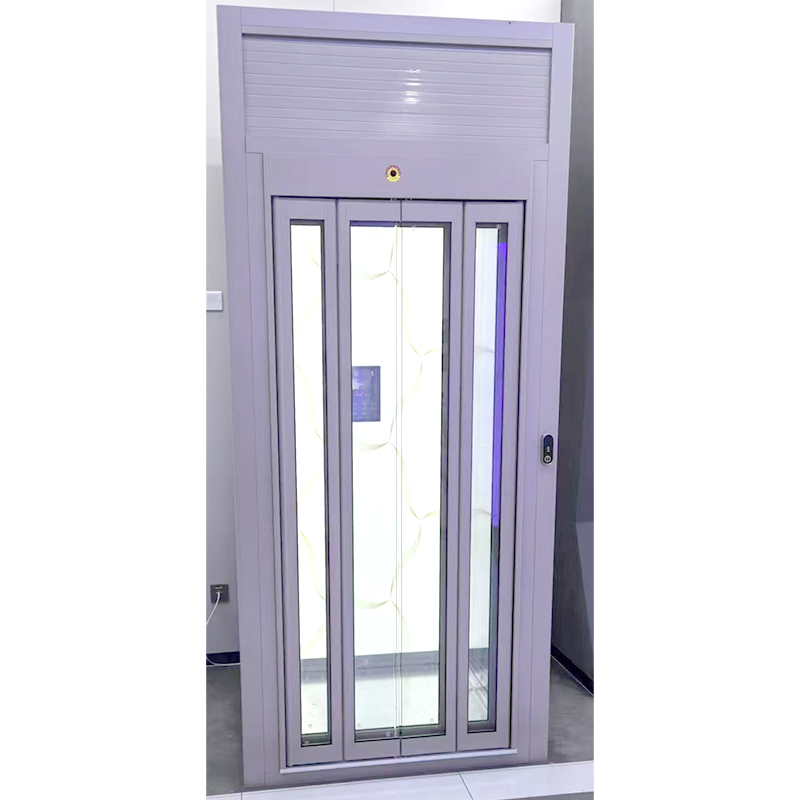
When planning a home lift installation, one of the most important layout decisions is the door configuration — specifically, whether the lift will have a single entry point on each floor, or whether passengers will enter from one side and exit from the opposite side (through-floor or opposite-entry configuration).
Single-entry lifts have doors on the same wall at every floor level. This is the simplest and most common configuration, well suited to homes where the lift shaft can be positioned so that all floors have convenient access from the same direction. It minimizes the complexity of the door system and the control wiring, and typically results in a lower overall installation cost.
Opposite-entry or through-floor configurations have doors on opposite walls — for example, the lift enters from the front at ground floor level and exits from the rear at first floor level. This layout is used when the floor plan of the home requires access from different directions on different levels, or when the most efficient traffic flow through the home dictates entry and exit from different sides. It requires careful coordination of door interlock systems on both walls and slightly increases the complexity and cost of the installation. Some lift designs also offer 90-degree corner-entry configurations for specific architectural layouts.
Selecting the most appropriate house lift door involves balancing practical constraints with safety requirements, aesthetic preferences, and budget. Working through the following considerations will help you arrive at the best decision:
The clear opening width and height of a home lift door directly affect who can use the lift comfortably and safely. Minimum dimensions are set by national standards, but practical accessibility requirements often exceed these minimums.
| User Type | Recommended Min. Clear Width | Recommended Min. Clear Height | Notes |
| Ambulant adults | 650 mm (26 in) | 2,000 mm (79 in) | Minimum for standard home use |
| Mobility aid users (walker/cane) | 750 mm (30 in) | 2,000 mm (79 in) | Comfortable clearance for frames and canes |
| Manual wheelchair users | 800 mm (32 in) | 2,050 mm (81 in) | ISO 21542 accessibility recommendation |
| Power wheelchair / scooter users | 900 mm (36 in) | 2,100 mm (83 in) | Allows comfortable entry without tight maneuvering |
A well-maintained residential elevator door operates smoothly and safely for many years with minimal issues. Neglecting basic maintenance allows small problems — a worn seal, a dirty track, a loose interlock — to develop into faults that compromise safety or require expensive repairs.
Tel/wechat/whatsapp: +86-13812695057
E-mail: [email protected]
Add: Building 7, No. 268, Chang 'an Road, Bache Sub-district, Dong Taihu Ecological Tourist Resort (Taihu New Town), Wujiang District, Suzhou City, Jiangsu Province, China