

 English
 Español
Home / News / Industry News / Villa Elevator Guide: Everything You Need to Know Before Installing One at Home
Industry News

Tel/wechat/whatsapp: +86-13812695057
E-mail: [email protected]
Content
A villa elevator — also referred to as a home elevator or residential lift — has moved well beyond the category of luxury indulgence. For multi-story private homes and villas, an elevator delivers genuine practical value: it makes daily life significantly more convenient, supports aging-in-place for older family members, provides mobility access for anyone with physical limitations, and adds a meaningful premium to property value. The combination of these factors has driven strong growth in residential elevator installations globally, and manufacturers now offer a wide range of systems specifically engineered for the space, structural, and aesthetic requirements of private homes rather than commercial buildings.
Unlike commercial elevators, which prioritize high-volume traffic capacity and operational efficiency above all else, a villa home lift is designed around the very different demands of residential use: compact footprint, quieter operation, interior design flexibility, lower installation complexity, and suitability for structures that were not originally designed with elevator shafts. Understanding the full range of options — from drive system to cabin finish — is essential for making a decision that serves your home well for decades. This guide covers every aspect of the residential elevator decision in practical, specific terms.
The drive system is the most fundamental technical choice in any home elevator installation. It determines how the lift moves between floors, what structural provisions are required, how much space the system occupies, how it performs in daily use, and what ongoing maintenance involves. The four main drive systems used in villa elevators each have distinct characteristics.
Hydraulic home elevators use a hydraulic pump and fluid-filled cylinder to raise and lower the cab. The pump unit — which contains the motor, fluid reservoir, and control valve — is typically installed in a separate machine room adjacent to or beneath the shaft, though some modern systems use compact in-shaft configurations that eliminate the need for a dedicated machine room. Hydraulic systems are known for their smooth, quiet ride quality and excellent load-carrying capacity, typically handling 250–400 kg in residential configurations. They are particularly well-suited to villas with two to four stops. The main consideration with hydraulic systems is the machine room requirement (where applicable) and the need for periodic hydraulic fluid maintenance. Modern eco-friendly hydraulic systems use biodegradable fluid options to address environmental concerns.
Traction elevators use a motor-driven sheave (pulley) and steel wire ropes to raise and lower the cabin, with a counterweight on the opposite side of the ropes that offsets much of the cabin's weight and reduces energy consumption. Gearless traction systems — where the motor drives the sheave directly without a gearbox — provide particularly smooth, energy-efficient operation and are now available in compact machine-room-less (MRL) configurations suitable for residential installation. Traction villa lifts are the preferred choice for homes with three or more floors where travel height exceeds the practical range of hydraulic cylinders. They have a longer lifespan than hydraulic systems, require less maintenance, and are highly energy-efficient. The installation requires a proper shaft structure with adequate headroom at the top for the machinery.
The pneumatic vacuum elevator is a genuinely different technology: the cab travels inside a self-supporting transparent polycarbonate tube, propelled upward by reducing air pressure above the cab (creating a partial vacuum that the atmospheric pressure below pushes it into) and descending by gravity with controlled air release. There are no cables, hydraulic fluid, or counterweights. The system is self-contained, requires no separate machine room, and can be installed without constructing a traditional shaft — it simply requires a hole in each floor slab of the appropriate diameter (typically 750–1050 mm). The panoramic transparent tube is a distinctive design feature that many homeowners find visually striking. Trade-offs include lower load capacity (typically 160–210 kg for single-person or two-person configurations), a characteristic operational sound from the air system, and limited cabin sizes compared to shaft-based elevators.
Screw-and-nut drive systems use a motorized nut that travels along a fixed threaded screw column to raise and lower the cabin. These systems are compact — requiring no separate machine room or counterweight — and are typically installed in a simple structural frame rather than a full enclosure shaft. They are popular in retrofit installations in existing villas where space is highly constrained and a through-floor vacuum system is not preferred. The ride quality of screw-and-nut systems has improved significantly in recent generations, though they tend to be somewhat noisier than hydraulic or traction alternatives at equivalent speeds. Load capacity is typically 200–300 kg, suitable for two to three passengers, and travel speed is lower than hydraulic or traction systems at around 0.10–0.15 m/s.
The table below summarizes how the main villa elevator drive types compare across the factors that matter most for a residential installation decision:
| Drive Type | Load Capacity | Machine Room | Ride Quality | Best For |
| Hydraulic | 250–400 kg | Often required | Very smooth, quiet | 2–4 floors, high comfort |
| Traction (MRL) | 250–400 kg | Not required (MRL) | Smooth, energy-efficient | 3+ floors, long travel |
| Pneumatic Vacuum | 160–210 kg | Not required | Good, unique aesthetic | Retrofit, minimal structure |
| Screw & Nut | 200–300 kg | Not required | Moderate | Space-constrained retrofit |
One of the most common practical questions homeowners have before committing to a villa elevator installation is how much space the system requires. The answer varies significantly by drive type and cabin size, but understanding the key dimensional requirements helps clarify what's feasible in a given home layout.
For shaft-based villa elevator systems — hydraulic and traction types — the shaft must be constructed as a dedicated structural enclosure. Internal shaft dimensions for a typical one-person residential elevator start at approximately 900 mm × 900 mm clear internal dimensions, which accommodates a very compact cabin suitable for one person. A more practical and comfortable two-person residential cabin requires a shaft internal dimension of approximately 1,000 mm × 1,200 mm to 1,100 mm × 1,400 mm. For a cabin large enough to accommodate a wheelchair user — which is an important consideration for future accessibility planning — the shaft needs to be at least 1,100 mm × 1,400 mm internally, accommodating a cabin of approximately 900 mm × 1,200 mm clear floor area. These dimensions should be treated as minimums; additional clearance between the shaft walls and the cabin frame is required for guide rails, counterweight (on traction systems), and service access.
Traditional residential elevator shafts require a pit at the base — a recessed section below the lowest floor landing — to accommodate the cab's buffer and over-travel space. Standard pit depths for home elevators range from 150 mm to 600 mm depending on the system and travel speed. This is an important consideration for ground-floor installations over concrete slabs, as excavating a pit in an existing slab adds cost and complexity. Some modern low-pit and zero-pit residential elevator systems are engineered to minimize or eliminate the pit requirement, at a modest trade-off in travel speed. At the top of the shaft, overhead clearance between the top landing floor and the ceiling (or roof) above must be sufficient for the elevator machinery in MRL systems or for the cab and safety components — typically 2,300–2,800 mm of total headroom above the top floor landing is required depending on the system.
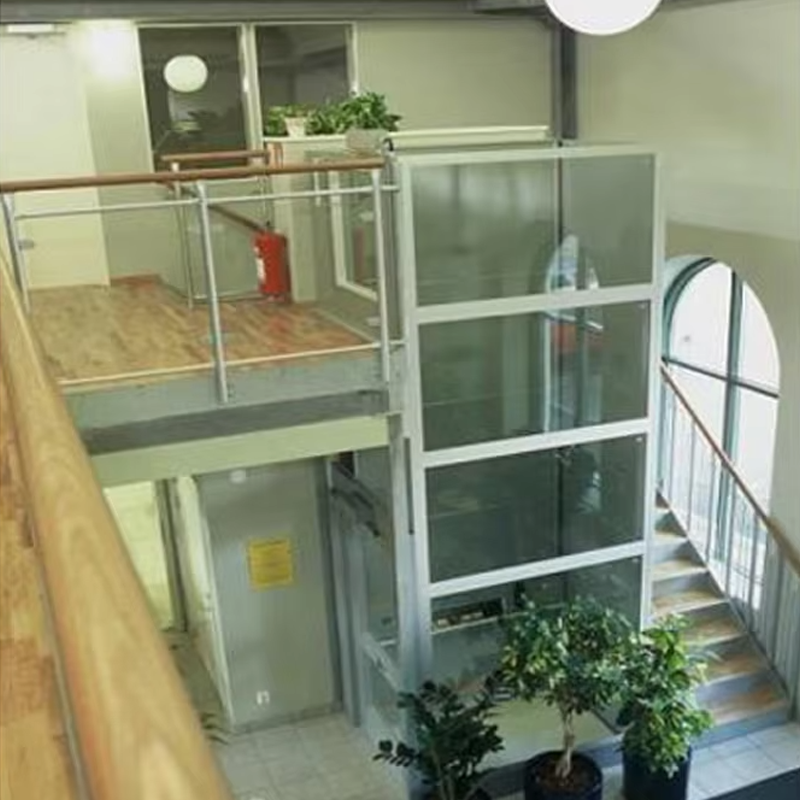
Retrofitting a villa elevator into an existing home — rather than incorporating it into new construction — presents additional structural and spatial challenges. The most common approach is to identify a space where a shaft can be constructed within the building footprint: an underutilized closet stack, a corner of a stairwell, or a space beside the main staircase. The shaft structure must be load-bearing, as it carries the weight of the elevator system and its occupants. A structural engineer should review the proposed shaft location to confirm the floor structure can carry the point loads and to specify any necessary reinforcement. For homes where internal shaft construction is genuinely impractical, pneumatic vacuum or compact screw-and-nut systems that require only a through-floor opening rather than a full enclosure shaft are worth serious consideration.
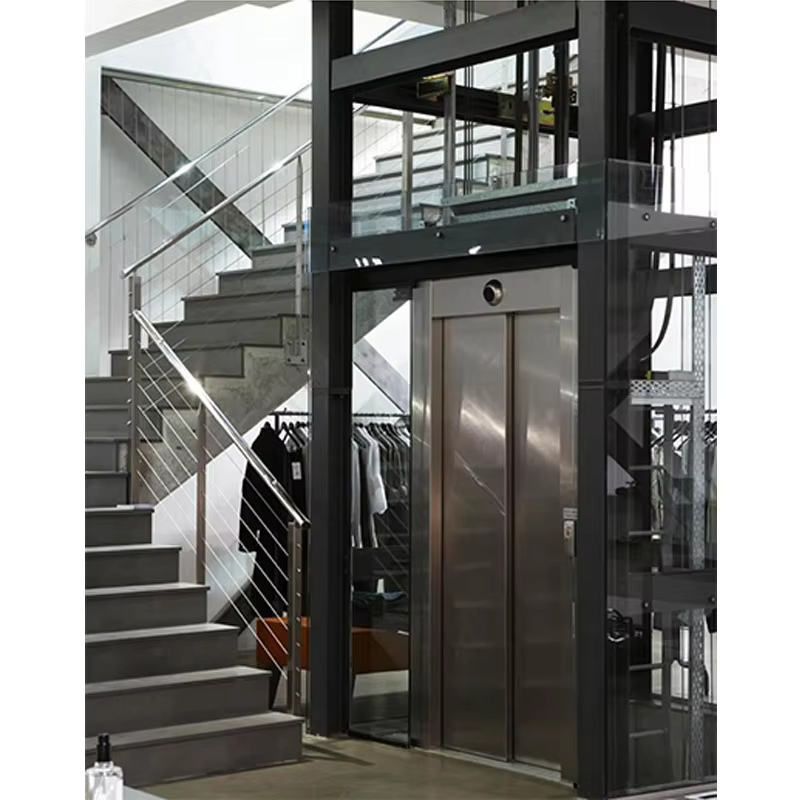
Home elevators are regulated products in most countries, and any system installed in a private residence should comply with applicable national or regional safety standards — such as EN 81-41 in Europe (the standard specifically for small home lifts), ASME A17.1 in North America, or equivalent local regulations. Beyond regulatory compliance, understanding what specific safety features matter helps homeowners evaluate products intelligently.
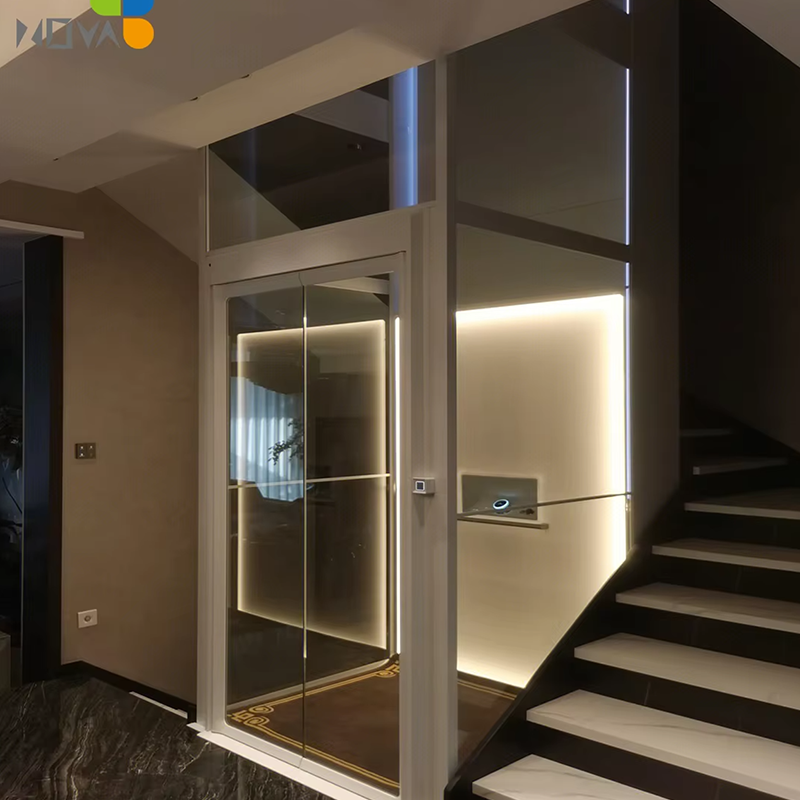
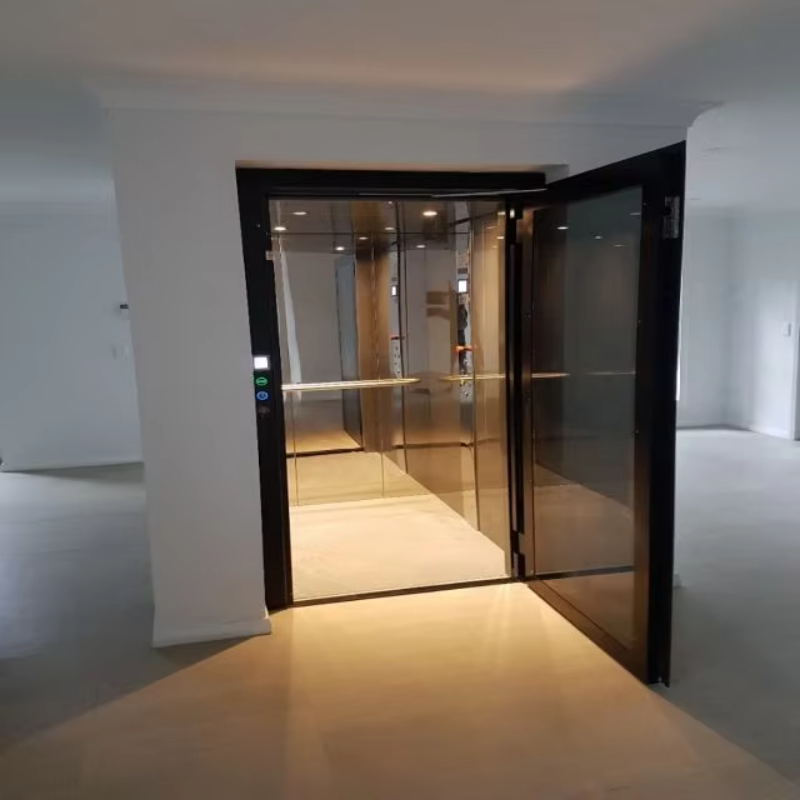
For most villa homeowners, the visual appearance of the elevator cabin inside the home matters considerably — it needs to complement the home's interior design rather than look like a piece of industrial equipment. Modern residential elevator manufacturers offer extensive customization options for cabin interiors, and working through these choices is an important and enjoyable part of the specification process.
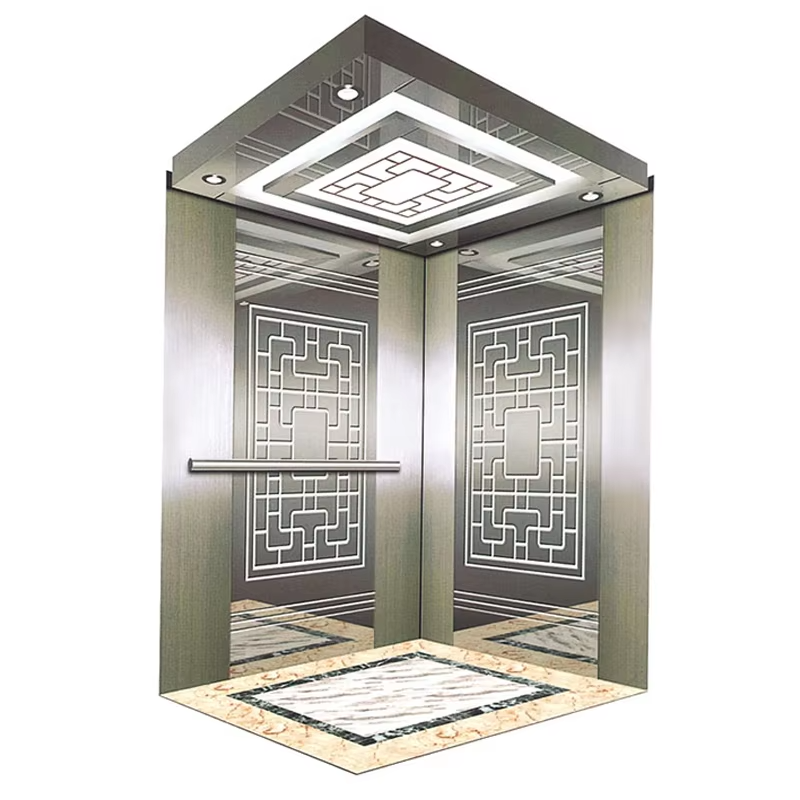
Cabin wall panels are available in a wide range of finishes: brushed stainless steel, mirror-polished steel, tempered glass panels (for a spacious, open feel), wood veneer or solid wood panels, painted steel in any RAL color, and decorative laminate options. The ceiling can be fitted with a variety of lighting configurations — LED flat panels, perimeter mood lighting, or decorative feature lights — and the choice of warm or cool white light tone significantly affects the overall ambiance of the cabin. Flooring options include carpet, wood (real or engineered), stone effect tiles, and rubber safety flooring for higher-traffic applications. Handrails are typically specified in brushed stainless steel or chrome but can be supplied in a variety of configurations and positions to suit accessibility needs.
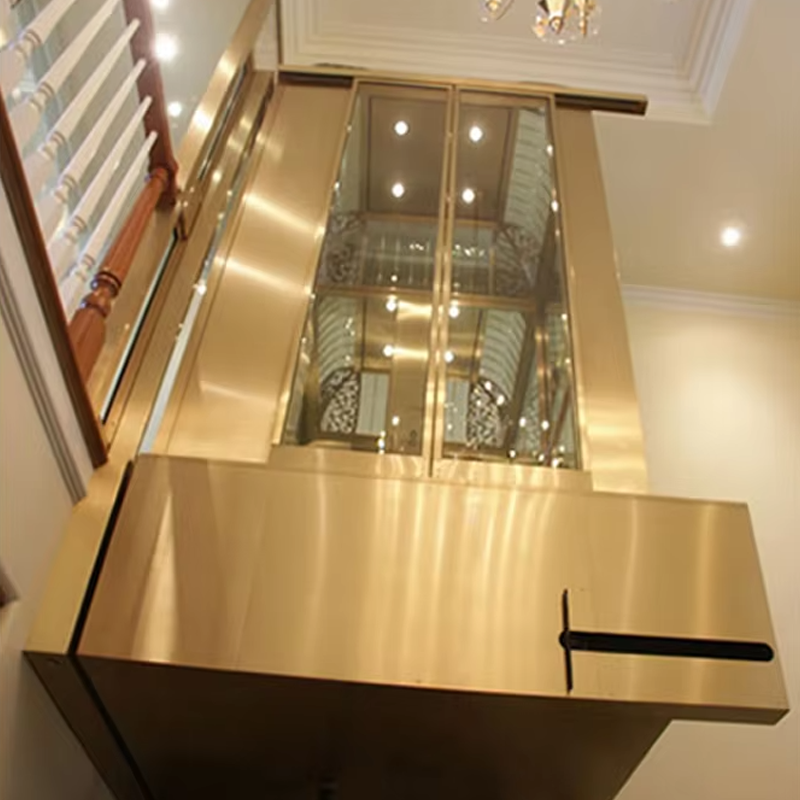
The control panel — both inside the cabin and at each floor landing — is another design element that can be customized significantly. Flush-mounted panels in brushed steel, glass-faced panels with touch controls, and discreet landing call stations that blend into wall finishes are all available depending on the manufacturer. For fully transparent cabin configurations — where glass walls are used throughout — the effect of looking through the cabin to the stairwell or atrium beyond can be spectacular in the right home interior, though it does require careful attention to lighting and the visual quality of the shaft structure behind the glass.
A common homeowner concern before installing a residential elevator is how much it will cost to run in terms of electricity consumption. The good news is that a modern villa elevator used at typical residential frequency consumes a relatively modest amount of energy — considerably less than many people assume.
The energy consumption of a home elevator depends on its drive system, motor rating, travel distance, and frequency of use. A typical gearless traction MRL residential elevator with a motor rated at 2–3 kW, making 10–15 trips per day of two to three floors each, consumes approximately 1–3 kWh per day in active use — comparable to running a washing machine. Hydraulic systems consume somewhat more energy during operation (the pump motor runs throughout the upward journey) but draw no power on descent. Standby power consumption for control systems is typically 10–30 W continuously. Energy-saving features such as LED cabin lighting, standby mode for the control system, and regenerative drive systems (on traction elevators) further reduce operating costs. For most households, the annual electricity cost of running a villa elevator is a minor figure compared to other household appliances.
Like any mechanical system, a home elevator requires periodic inspection and maintenance to remain safe and reliable over its service life. Understanding what maintenance involves helps homeowners plan for the ongoing commitment and cost before installation.
The total cost of a villa elevator installation varies considerably based on drive system, number of stops, cabin size, finish level, shaft construction requirements, and local market conditions. Understanding the main cost components helps in setting realistic expectations and comparing quotes effectively.
For a basic residential elevator — compact cabin, standard finishes, two to three stops, straightforward installation in a new-build home with a pre-formed shaft — the equipment-and-installation cost typically ranges from USD 15,000 to USD 30,000 for a screw-and-nut or pneumatic system, and USD 20,000 to USD 45,000 for a hydraulic or MRL traction system, depending on configuration. Premium cabin finishes, glass shaft enclosures, larger cabin sizes, and additional stops all add to the equipment cost. In a retrofit installation where a shaft must be constructed in an existing building, civil and structural work typically adds USD 5,000 to USD 20,000 or more depending on the complexity of the construction work involved.
When evaluating quotes, confirm that they include all elements: the lift equipment itself, delivery and installation, electrical supply and connection, any required civil or structural work, commissioning and safety testing, and first-year maintenance or inspection. Quotes that omit the structural or electrical work can appear much cheaper than they truly are when all costs are included. Ongoing annual maintenance contracts typically run USD 300 to USD 800 per year for a residential elevator in a single-family home context.
Choosing the right elevator supplier for your villa is as important as choosing the right elevator type. The supplier you select will be your partner for installation, commissioning, ongoing maintenance, and any issues that arise over the elevator's service life. The following questions help distinguish between suppliers who will serve you well and those who may not.
Tel/wechat/whatsapp: +86-13812695057
E-mail: [email protected]
Add: Building 7, No. 268, Chang 'an Road, Bache Sub-district, Dong Taihu Ecological Tourist Resort (Taihu New Town), Wujiang District, Suzhou City, Jiangsu Province, China