

 English
 Español
Home / News / Industry News / Cabin and CW Parts: What They Are, How to Choose, and Where They Matter
Industry News

Tel/wechat/whatsapp: +86-13812695057
E-mail: [email protected]
Content
A hotel maintenance manager once ordered new stainless steel car panels because the old ones looked dated. The parts arrived on time, but the elevator started stopping unevenly and the motor sounded strained. A recheck showed a fairly common mistake: the counterweight had been left unchanged while the car gained nearly 60 kg. This is why cabin and CW parts should always be treated as one engineering set, not two independent shopping lists.
In a traction elevator, the counterweight (CW) offsets the weight of the cabin and part of the rated load. The cabin and counterweight sit on opposite sides of the traction sheave and move at the same speed. When their masses are correctly matched, the motor only has to handle the load difference and friction. When they are mismatched, every ride puts extra stress on the motor, the drive, the guide shoes, and the safety system.
The category covers more than the finished car you see. Cabin parts include the car frame, cabin panels, ceiling, floor, handrails, and the interior anchors for control panels and lighting. CW parts include the counterweight frame, counterweight blocks or filler plates, and the hardware that ties them to the guide rails and suspension ropes. Guide shoes and rope sockets appear on both sides, which is why they are usually grouped in the same product family.
Counterweights are sized using the balance factor, usually 45 to 50 percent of rated load for passenger lifts. The target counterweight mass is the empty cabin weight plus that percentage of the rated load. Higher balance factors are sometimes used for freight lifts or rope-heavy configurations, but 50 percent is a simple starting point.
For example, if the empty cabin weighs 1,600 kg and the rated load is 1,000 kg, a 50 percent balance factor gives a counterweight target of 2,100 kg. To apply this to a replacement project:
This math matters even when the counterweight is out of sight. A cabin modernization that adds stainless cladding, a heavier ceiling, or stone flooring increases cabin mass. If the counterweight is not adjusted, the motor has to supply more torque, the brake has to hold a heavier car at stops, and the guide shoes see higher contact pressure.
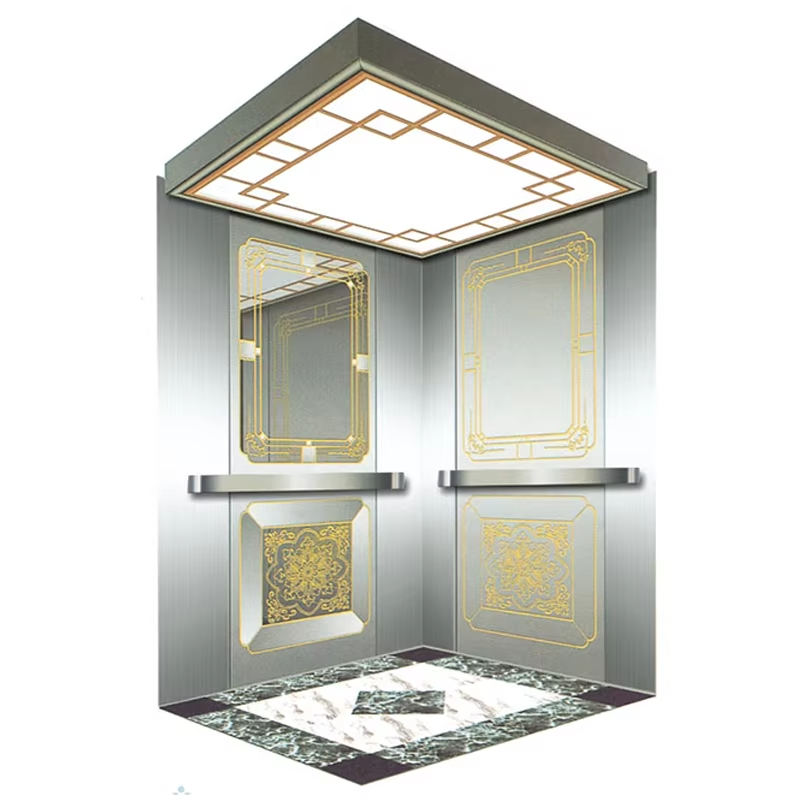
The cabin frame is the structural backbone. It carries the floor, the wall panels, the door drive, and the load. When you order a cabin, the first questions are rated load, speed, door width, and the position of the door. The frame must match the guide shoe mounting pattern and the rope suspension layout. Aesthetic upgrades matter, but they cannot fix a frame that is too light or a panel that blocks the door operator niche.
For renovation projects, a pre-assembled stainless steel cabin saves labor and makes the final weight easier to predict. This is especially important before you recalculate the counterweight, because every material choice changes the cabin dead weight.
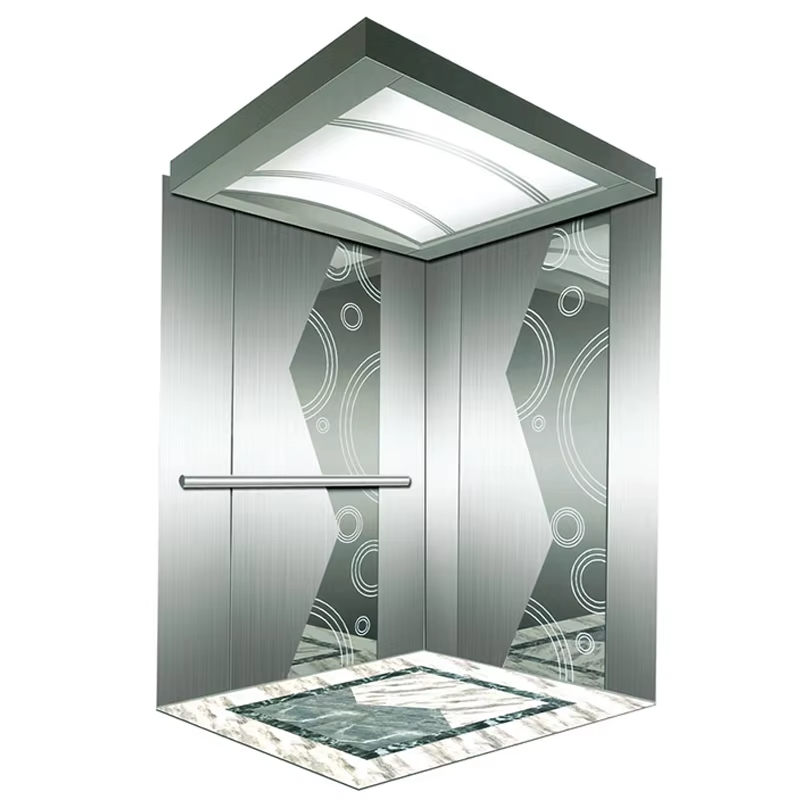 Customized Stainless Steel Passenger Elevator Cabin with Low Noise and Multiple FinishesFor renovation or new installations, this pre-assembled stainless steel cabin offers predictable dead weight and low-noise operation. Multiple finish options simplify matching interior designs while the documented weight data eases counterweight calculations.View Product →
A customized cabin for hotels or office buildings usually uses stainless steel panels, LED ceiling modules, and a PVC or stone-pattern floor. Each one of those choices changes the mass that the counterweight must balance. Documented weights from the supplier make the counterweight calculation much easier later.
The counterweight frame does three jobs: it holds the blocks, it provides the attachment points for the guide shoes, and it transfers the suspension rope force into the stack of weights. A frame must be deep enough to accept standard blocks, but not so wide that it hits the shaft hoistway obstructions. For residential buildings and small machine-room-less lifts, compact frames are often specified because the pit and top clearance are tight.
When evaluating a frame, check the material thickness, bolt pattern, and whether it uses the same guide shoe or roller guide configuration as the car. Some frames use welded block castings; others use bolted retaining plates so blocks can be added or removed on site.
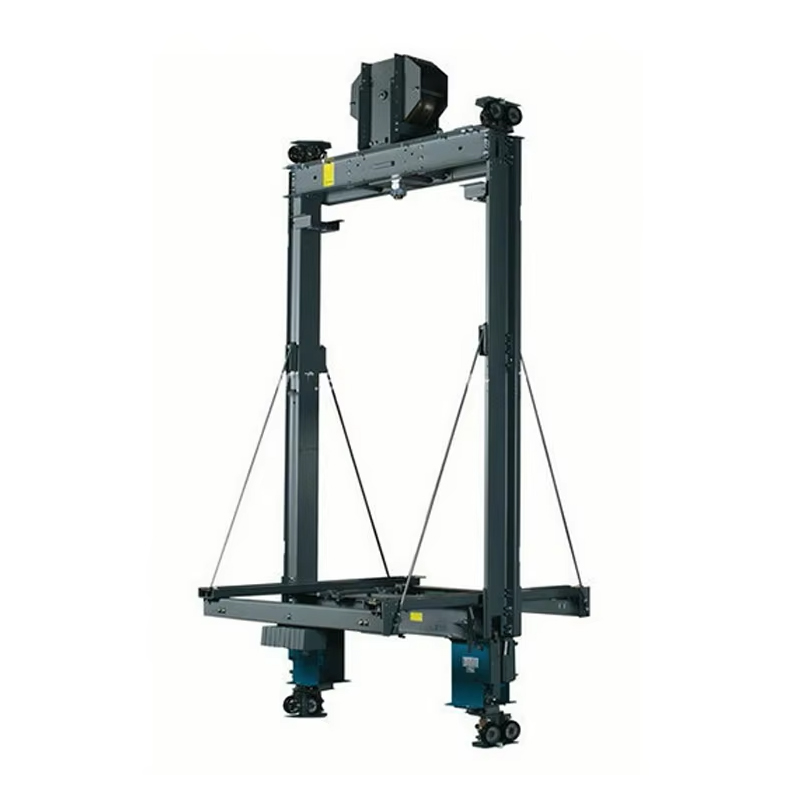 Heavy-Duty Stainless Steel Elevator Counterweight Frame AssemblyThis heavy-duty counterweight frame supports precise mass balancing for apartments and villas. Its bolted retaining plates allow on-site adjustment of blocks, while stainless steel construction and ISO certification ensure dimensional consistency for reliable assembly.View Product →
Counterweight blocks turn the frame into a precise mass. The material choice changes the height of the stack, the cost per kilogram, and the way the blocks are handled on site.
| Material | Relative density | Typical use | Handling |
|---|---|---|---|
| Cast iron | High | High-capacity or space-tight lifts | Heavy, requires lifting tools |
| Steel plate | High | Machine-room and freight lifts | Good for fine weight adjustment |
| Concrete | Medium | Most passenger and residential lifts | Lower cost, more blocks needed |
| Stainless or clad blocks | Medium-high | Corrosion-prone or visually exposed spaces | Better moisture and dust resistance |
For most passenger lifts, concrete blocks provide the necessary weight at a lower cost, but they are bulky. Cast iron is denser and takes less vertical space, which helps when the shaft is short or the required mass is high. Steel filler plates are useful for fine adjustments because you can add or remove one plate without rebuilding the whole stack.
Before ordering, confirm the block width, depth, and central hole or notch. A block that is wider than the frame will require a different frame or machining. Also ask about weight tolerance; a small percent variation becomes a noticeable balance error on a heavy counterweight.
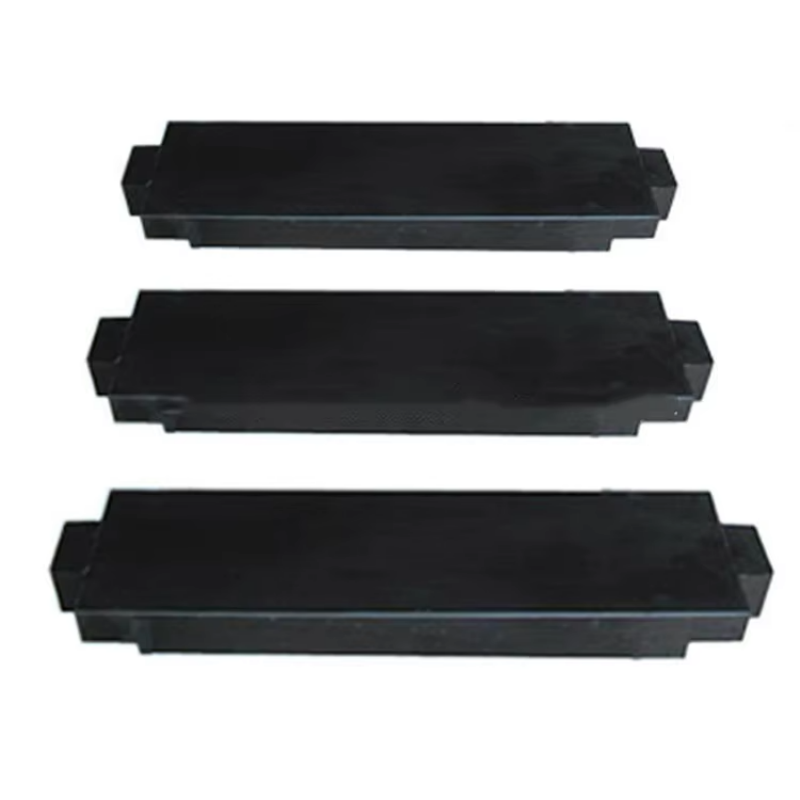 Elevator Counterweight Filler Weight Block ComponentsThese filler weight blocks are key to fine-tuning counterweight mass for accurate balance. Confirm width, depth, and central notch to match your frame; weight tolerance affects final balance precision on heavy counterweights.View Product →
Both the cabin and the counterweight run on guide rails. Sliding guide shoes are simple and economical; rolling guide shoes reduce vibration and are more common on the car side in medium and high speed lifts. The shoes must match the rail profile. Changing from T75 to T89 rail, or replacing the rail type, means changing the shoe as well. If you need a clearer view of how rail specifications interact with car and counterweight guidance, our guide rail selection guide covers the profile options and installation basics.
Rope sockets and rope terminations connect the suspension ropes to the car frame and counterweight frame. A machined rope socket is safer than a generic clamp, but it must be sized for the rope diameter and the number of ropes. Check the pin width, the wedge angle, and whether the socket has a visible inspection hole for routine checks.
Build a complete specification before you ask for a quote. The items below are worth documenting:
A supplier that can quote cabin and counterweight parts together can often reduce interface problems. VITIN builds cabin frames, counterweight frames, blocks, guide shoes, and interior finish parts under the same product structure, which makes it easier to get a consistent weight calculation and a matching fastening system. Ask the factory for component drawings and weight data; the best quotes include those numbers.
Cabin and CW parts are mass, not just hardware. The cabin gives the lift its function and appearance, while the counterweight keeps the motor and brake working within their intended load range. When you plan a new installation or a renovation, calculate the target counterweight, match the frame and blocks to the shaft, and check the guide shoes and rope attachments carefully. Document every weight change so the next modernization starts from a known baseline.
Tel/wechat/whatsapp: +86-13812695057
E-mail: [email protected]
Add: Building 7, No. 268, Chang 'an Road, Bache Sub-district, Dong Taihu Ecological Tourist Resort (Taihu New Town), Wujiang District, Suzhou City, Jiangsu Province, China