

 English
 Español
Home / News / Industry News / Car Elevator Guide: Types, Capacity, Safety Standards & Buying Tips for Projects
Industry News

Tel/wechat/whatsapp: +86-13812695057
E-mail: [email protected]
Content
A car elevator is one of those pieces of equipment most people never think about until they actually need one. For car dealerships, multi-storey parking structures, luxury homes and marina projects, a vehicle elevator is often the only practical way to move a car from one level to another. At VITIN, we have spent years supplying complete lifts, elevator parts and escalator systems to buyers worldwide, and vehicle lifts remain one of the most interesting categories we work with. This guide walks through the fundamentals and the practical details worth knowing before you specify one.
A car elevator, or vehicle elevator, is a lifting system designed specifically to carry automobiles, vans, small trucks and similar vehicles vertically inside a building. Instead of a conventional passenger cabin, the platform or car enclosure is sized and reinforced for the weight and footprint of a vehicle, and the doors, guides, drive and control system are all selected around that duty.
Most vehicle lifts fall into one of two broad groups:
It is also worth separating a true car elevator from a vehicle lift or parking lift. A lift generally raises a car over a short distance for storage or service work, while an elevator is a permanent, code-compliant installation serving defined floors with doors, landing sills and full safety devices.
Demand for vehicle elevators comes from a fairly predictable set of building types, and each one places a slightly different emphasis on capacity, speed, finish and control.
Because the application sets the specification, it always pays to confirm the access route, the largest vehicle expected and how often the unit will run before the design is frozen.
Vehicle elevators sit well above passenger lifts in terms of load. The table below gives a general picture of the ranges we see in real projects; final figures always come from the vehicle dimensions and the traffic study.
| Parameter | Typical range | Notes |
|---|---|---|
| Rated capacity | 2000 – 5000 kg | Heavier vehicles and boat cradles push towards the upper end |
| Car or platform length | 5000 – 6500 mm | Must clear the longest vehicle plus mirrors and clearance |
| Car or platform width | 2200 – 3200 mm | Driven by door opening and manoeuvring space |
| Travel speed | 0.25 – 1.0 m/s | Low speeds suit short travel and hydraulic drives |
| Number of stops | 2 – 6 | Automated parking systems can serve more |
| Door type | Vertical bi-parting or wide centre-opening | Chosen for the clear opening required |
Two numbers deserve special attention. The first is the clear door opening, because a door that is 100 mm too narrow turns a working installation into a permanent headache. The second is the real vehicle weight including fuel, luggage and accessories, which is often 200 to 400 kg more than the brochure figure.
For projects at the top of the weight range, many installations are built around a heavy-duty platform rather than a standard car enclosure, since the platform can be engineered purely for load and access.
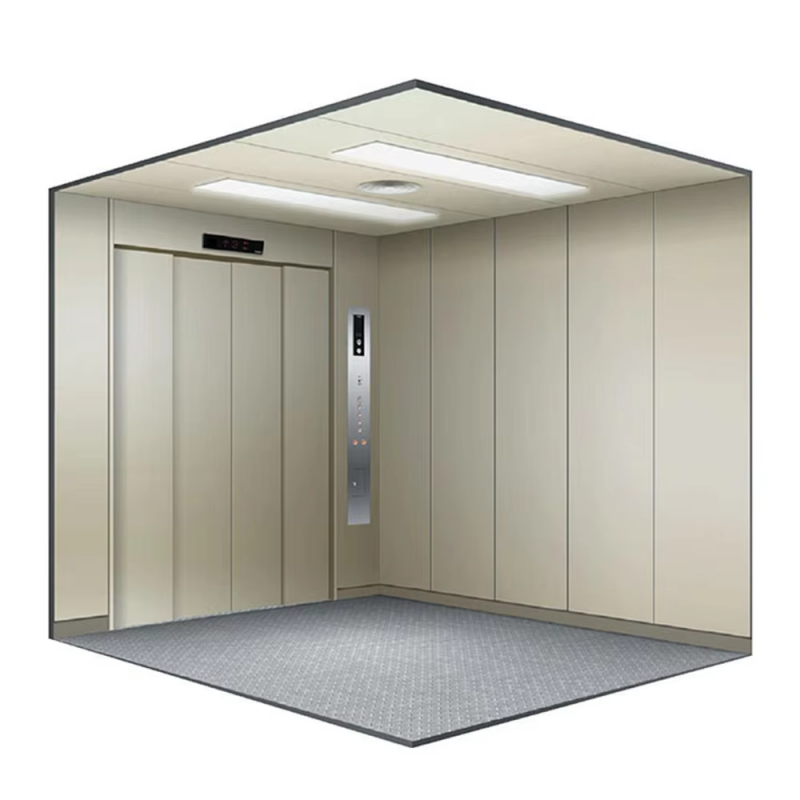 VTEF101 Ascensores Industrial Freight Elevator with Strong Loading CapacityVTEF107 Ascensores Elevadores Automatic Food Elevator with Microcomputer Control PanelView Product →
Two drive families dominate this segment. Hydraulic drives have long been the default for car elevators because they deliver high force from a compact power unit, handle heavy loads well and suit low-rise travel. Traction drives, and in particular permanent-magnet synchronous gearless machines with VVVF control, are increasingly specified where smoother ride quality, lower energy consumption and machine-room-less layouts are priorities.
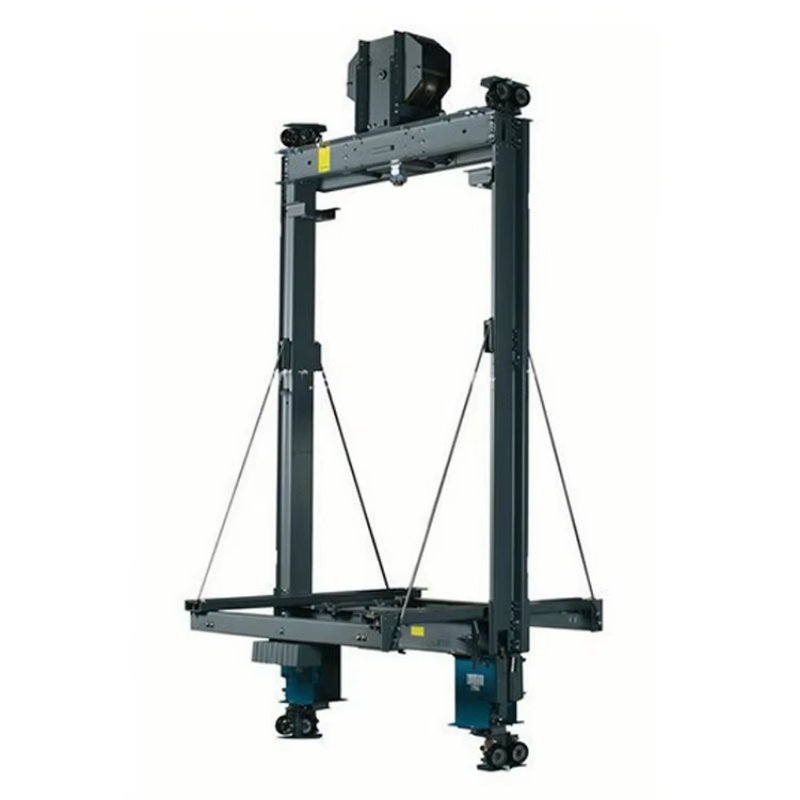
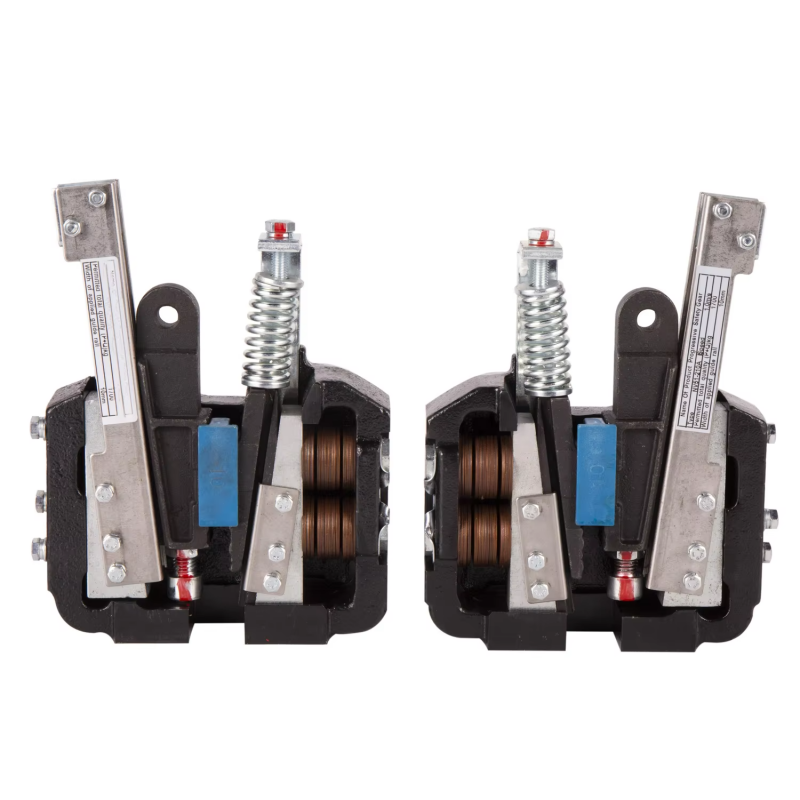
Whichever drive is chosen, the mechanical package has to be uprated for vehicle duty. That means heavy-duty guide rails, robust guide shoes, larger traction sheaves and wire ropes, and safety gear rated to bring a fully loaded platform to a controlled stop. Buyers often ask us how motor selection affects the whole installation, and the principles hold whether the lift carries people or cars.
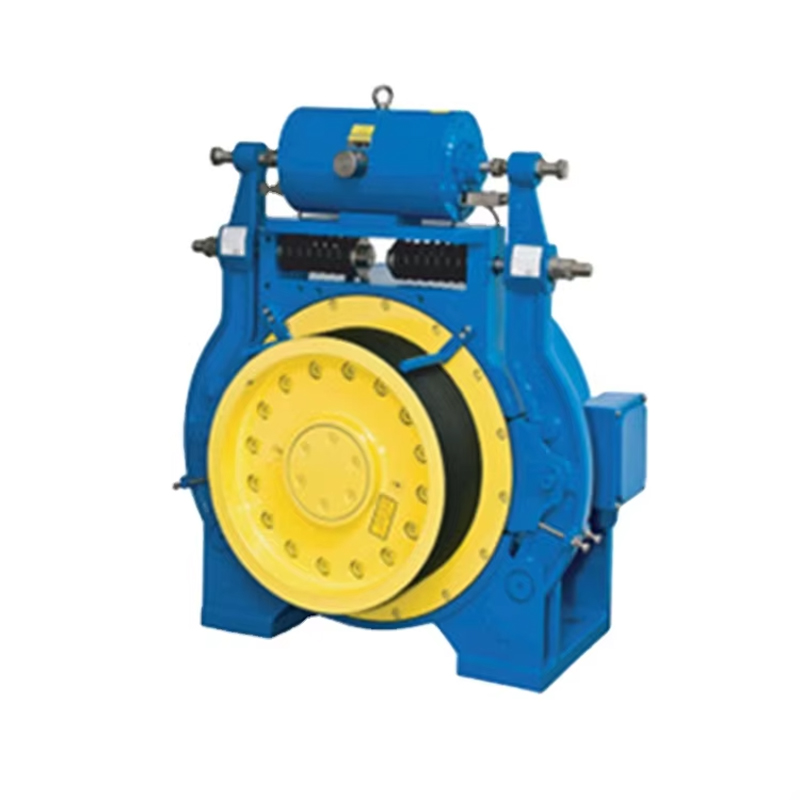 VTSP228 1350kg-2000kg Geared Gearless Traction Machine AC1 Elevator Motor Stainless Steel VTSP205 800kg 1350kg Elevator Motor Gearless Lift Traction MachineView Product →
Around the drive, the rest of the system matters just as much: door operators, interlocks, buffers and the control cabinet that coordinates everything. Where the elevator forms part of a parking system, the controller also has to communicate with the building management system.
In most markets a car elevator is treated as a special-purpose or goods-type elevator rather than a standard passenger unit, and the applicable code reflects that. In Europe the EN 81 series governs lift design and installation; in North America ASME A17.1 and its Canadian counterpart set the requirements; in China, GB standards apply. Regulators generally ask for evidence that the installation behaves safely under a vehicle load, which shapes everything from buffer selection to the strength of the platform structure.
Because vehicles carry fuel, ventilation is not optional. Enclosed shafts and cabins need mechanical ventilation with carbon monoxide detection, and fire-rated construction is usually required where the lift passes through a parking level.
Retrofitting a vehicle elevator into an existing building is almost always harder than including one at the design stage, because the structure has to carry concentrated loads and the pit and headroom dimensions are unforgiving. Points to settle early include:
Fabrication lead time and site readiness are the two factors that most often decide whether a project finishes on schedule. Good suppliers provide dimensional drawings and load data early so the builder can prepare the shaft before the equipment ships.
Buying a vehicle elevator is closer to buying a small piece of infrastructure than to buying a component, so the questions you ask a supplier should focus on engineering support and after-sales capability as much as on price.
It is equally important to be realistic about what a standard catalogue product can do. A unit that works beautifully for a 2500 kg sedan in a dealership is not automatically the right answer for a 4500 kg yacht cradle outdoors, and a supplier who tells you otherwise is not doing you any favours. Reviewing the basic configuration options is a sensible first step.
 Car Elevator Manufacturersinformation to be updatedView Product →
Once in service, a car elevator needs the same discipline as any other lift, with a few additions. Vehicle loads are heavy and often unevenly distributed, so guide shoes, ropes, sheaves and door mechanisms wear faster than in passenger service. A planned maintenance programme covering regular inspection of safety devices, periodic checks on the drive and annual load testing keeps both the equipment and the certification valid.
Older installations benefit from modernisation long before they stop working. Replacing a relay-based controller with a modern VVVF control cabinet, upgrading the door operator and adding an automatic rescue device usually improves reliability more than a full replacement, at a fraction of the cost. Guide rails and landing doors can often be retained, which shortens the shutdown considerably.
A car elevator is a straightforward concept with a lot of engineering behind it. Get the capacity, dimensions and safety package right at the beginning, choose components that can actually be serviced in your market, and the installation will quietly do its job for decades. If you are planning a vehicle lift project and want to talk through capacity, drive options or spare parts, our team is happy to help with drawings, specifications and quotations.

Tel/wechat/whatsapp: +86-13812695057
E-mail: [email protected]
Add: Building 7, No. 268, Chang 'an Road, Bache Sub-district, Dong Taihu Ecological Tourist Resort (Taihu New Town), Wujiang District, Suzhou City, Jiangsu Province, China