

 English
 Español

Home / News / Industry News / Elevator Counterweight Frame Guide: Types, Sizing, Installation, Sourcing
Industry News

Tel/wechat/whatsapp: +86-13812695057
E-mail: [email protected]
Ask an experienced lift technician which component they would rather not see fail, and the counterweight frame is often somewhere near the top of the list. It sits quietly at the back of the shaft, does its job for decades, and rarely gets a second look during a service visit. Yet this simple welded steel structure carries hundreds of kilos of filler weight, keeps rope tension balanced, and directly affects ride comfort, motor load and safety clearances.
We build and supply counterweight frames and the parts that surround them, so we have seen both the good and the avoidable problems. This article walks through what the frame does, how frames are usually configured, how to size one, what to check during installation, and what to ask a supplier before you place an order.
An elevator car is heavy, and the load inside it changes all day. Without a counterweight, the traction machine would have to lift the entire car mass plus the passengers on every trip. The counterweight balances a fixed portion of that mass, usually the empty car weight plus around 40 to 50 percent of the rated load, so the motor mainly overcomes friction, inertia and the difference between car and counterweight.
The frame is the skeleton that makes this possible. It holds stacked filler weights in a defined position, connects to the hoisting ropes through rope sockets or a sheave, and rides up and down on the counterweight guide rails through guide shoes. Every one of those interfaces has to be aligned, because a frame that twists or binds will show up as vibration in the car, uneven rope tension or premature shoe wear.
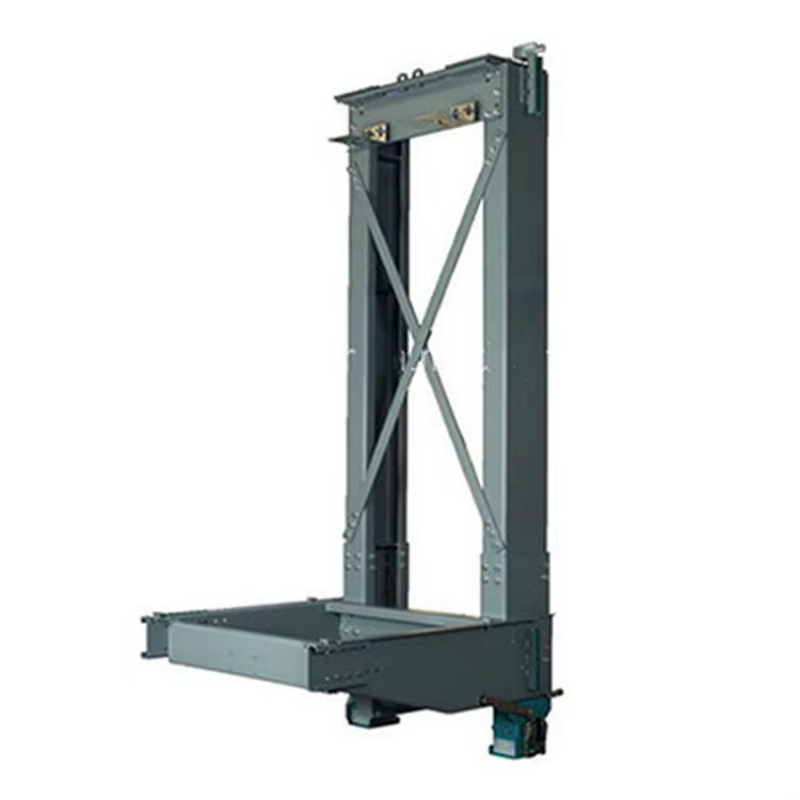 VTSP182 Custom Elevator Counterweight FrameA custom counterweight frame component for elevator assemblies, positioned where frame alignment and filler retention matter.View Product →
Most frames in service today fall into a few familiar shapes. The classic design is a welded steel structure with two vertical side plates, top and bottom cross members, and a set of tie rods or retaining plates that clamp the fillers in place. Lighter versions use thinner cold-formed sections for villa lifts and small dumbwaiters, while freight and hospital applications often need heavier plate and additional bracing.
There is also a practical split between frames designed around cast iron or steel plate fillers and frames designed around concrete blocks. The block type usually has a slightly different internal geometry and clamping arrangement, because concrete needs support across a wider face and should not be allowed to shift when the lift stops abruptly.
| Frame style | Typical application | What to verify |
|---|---|---|
| Welded steel frame with tie rods | Passenger, hospital and freight lifts | Plate thickness, weld quality, filler stack height |
| Bolted or knock-down frame | Site assembly, difficult shaft access | Bolt grade, torque values, re-check after running |
| Light-section frame | Villa lifts, home lifts, dumbwaiters | Guide shoe fit, overall stiffness under load |
| Heavy-duty assembly | Logistics, industrial and high-capacity goods lifts | Rated filler mass, sheave mounting, buffer clearance |
Sizing starts with two numbers: the mass of the finished counterweight and the space available in the shaft. Balance is normally calculated as car weight plus a percentage of rated load, and that total is then divided into a frame tare weight plus filler weight. If the frame is too light, you simply need more filler; if it is too light structurally, the frame will flex and the fillers will work loose.
Three details matter more than most people expect. First, the filler cavity must match the actual block or plate dimensions you intend to use, including tolerances. Second, the rope socket or sheave positions must line up with the rope drop from the traction machine, otherwise the frame will hang at an angle. Third, the guide shoe mounting faces should be machined or at least flat enough that shoe alignment can be adjusted during installation rather than forced.
For concrete-filled designs, choose blocks with consistent density and a clean, square profile. Mixed block sizes and chipped edges are a common reason a frame ends up rattling after a few months of service.
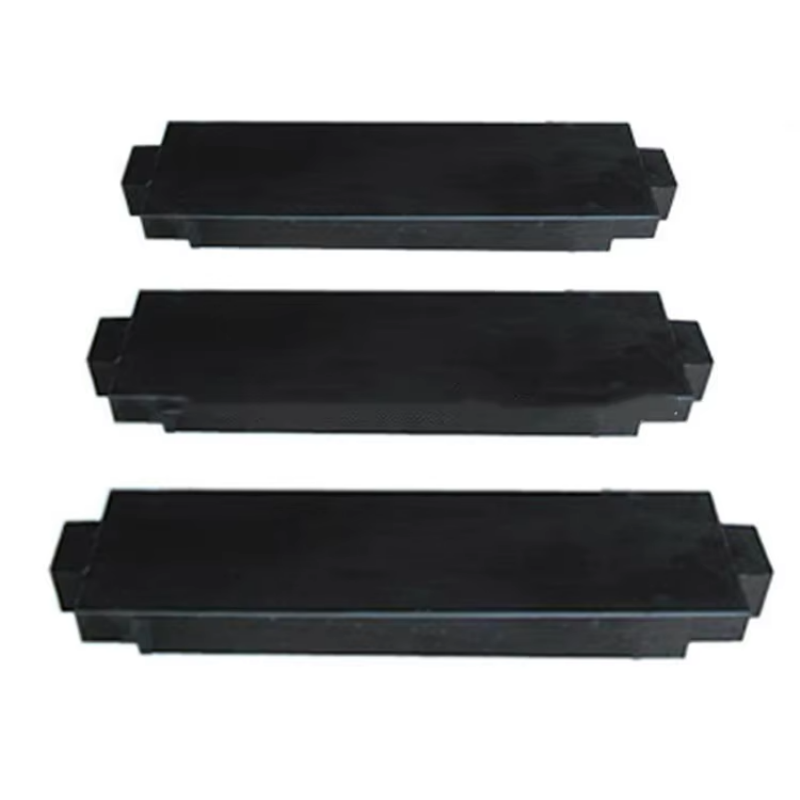
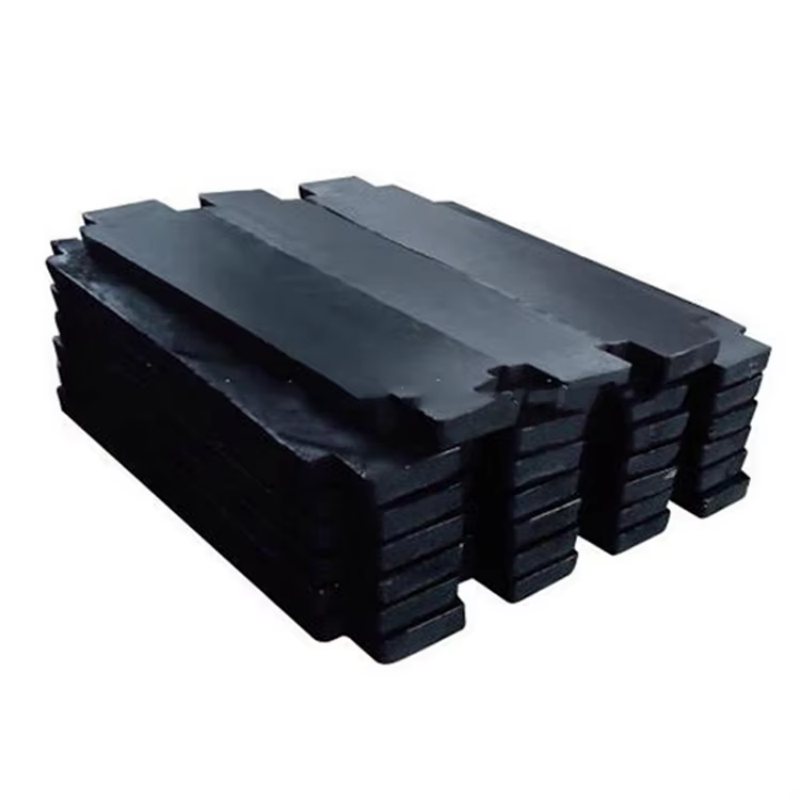 VTSP171 Elevator Concrete Counterweight BlocksCustom concrete blocks intended for use with an elevator counterweight frame, relevant when selecting fillers for a counterweight assembly.View Product →
The frame is never a standalone item. It sits inside a small system of components that have to be selected together:
It helps to treat these as one bill of materials. Ordering a frame from one source and shoes from another is perfectly workable, but the shoe mounting dimensions and rail size have to be confirmed in writing first. You can review the wider counterweight frame range to see how the assembly is normally broken down.
Almost every counterweight problem we hear about traces back to installation sequence rather than the hardware itself. Rails should be plumbed and fixed before the frame is hung, and the frame should never be used to pull rails into line.
Rail condition is part of this picture. A frame with correctly set shoes will still vibrate if the rail joints are stepped or the rail faces are damaged, so it is worth reading up on guide rail types, standards and installation practice before commissioning.
A counterweight frame inspection is quick when you know where to look. During routine maintenance, our customers typically check the following:
Anything that looks like a shifted filler or a loose tie rod deserves attention straight away. It is a small fix now and a much larger one if the frame starts to oscillate.
Counterweight frames look similar in photographs, which is exactly why a short technical conversation is worth more than a catalogue page. When you request a quote, share the rail profile, the required counterweight mass, the filler type, the roping arrangement, the shaft drawing and the finish you need. A supplier who asks follow-up questions about rope drop and buffer clearance is usually the one worth working with.
Also confirm packing method, marking, and whether the frame ships with fasteners and retaining plates or as a bare structure. For larger projects, ask for the dimensional drawing before production so the shaft can be checked in parallel. Heavy-duty and villa applications often benefit from a pre-assembled unit, which reduces site time considerably.
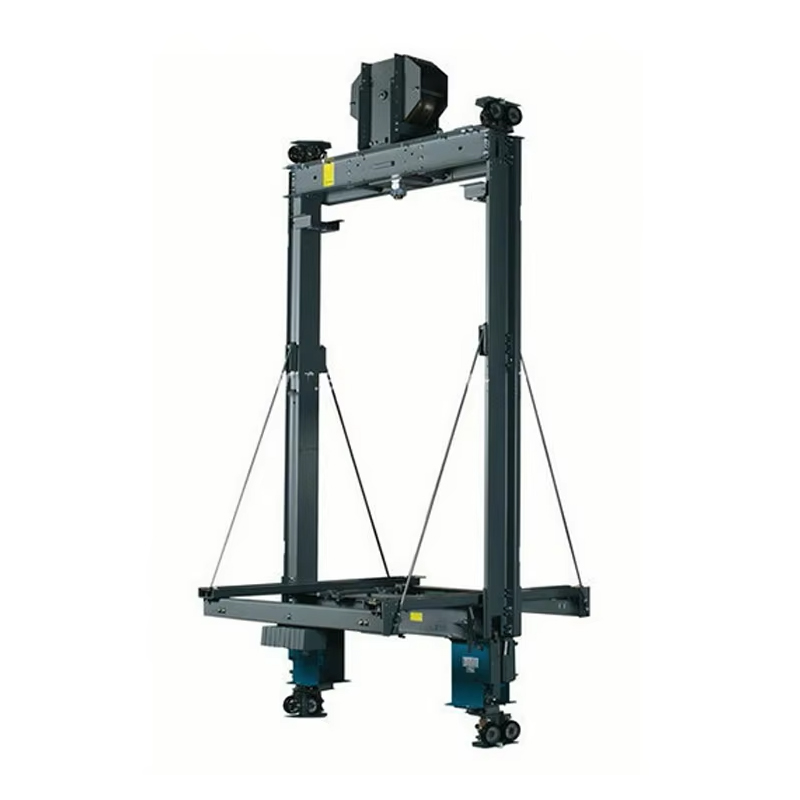 VTSP142 Heavy-Duty Elevator Counterweight Frame AssemblyA stainless steel counterweight frame assembly for apartment and villa use, offered with standard export packaging and a one-year warranty.View Product →
Sometimes, if the rail spacing, filler mass and guide shoe interfaces still match the new design. In most modernization projects the frame is replaced together with the fillers, because reusing an old frame means accepting its corrosion history and unknown plate thickness.
No. The frame only needs enough stiffness to hold the fillers and keep the shoes aligned. Extra weight that is not part of the balance calculation just adds load to the machine and the buffers.
Specify galvanized or properly primed and top-coated steel, keep drainage paths clear, and include the frame in the shaft inspection routine rather than treating it as fit-and-forget equipment.
A counterweight frame is one of the least visible purchases in an elevator project and one of the easiest to get wrong by a few millimetres. Get the balance calculation, filler fit, shoe interface and installation sequence right, and it will run quietly for the life of the building. If you are working through a project and want a second opinion on dimensions or filler selection, our team is happy to look at your shaft drawing and talk through the options.
Tel/wechat/whatsapp: +86-13812695057
E-mail: [email protected]
Add: Building 7, No. 268, Chang 'an Road, Bache Sub-district, Dong Taihu Ecological Tourist Resort (Taihu New Town), Wujiang District, Suzhou City, Jiangsu Province, China